
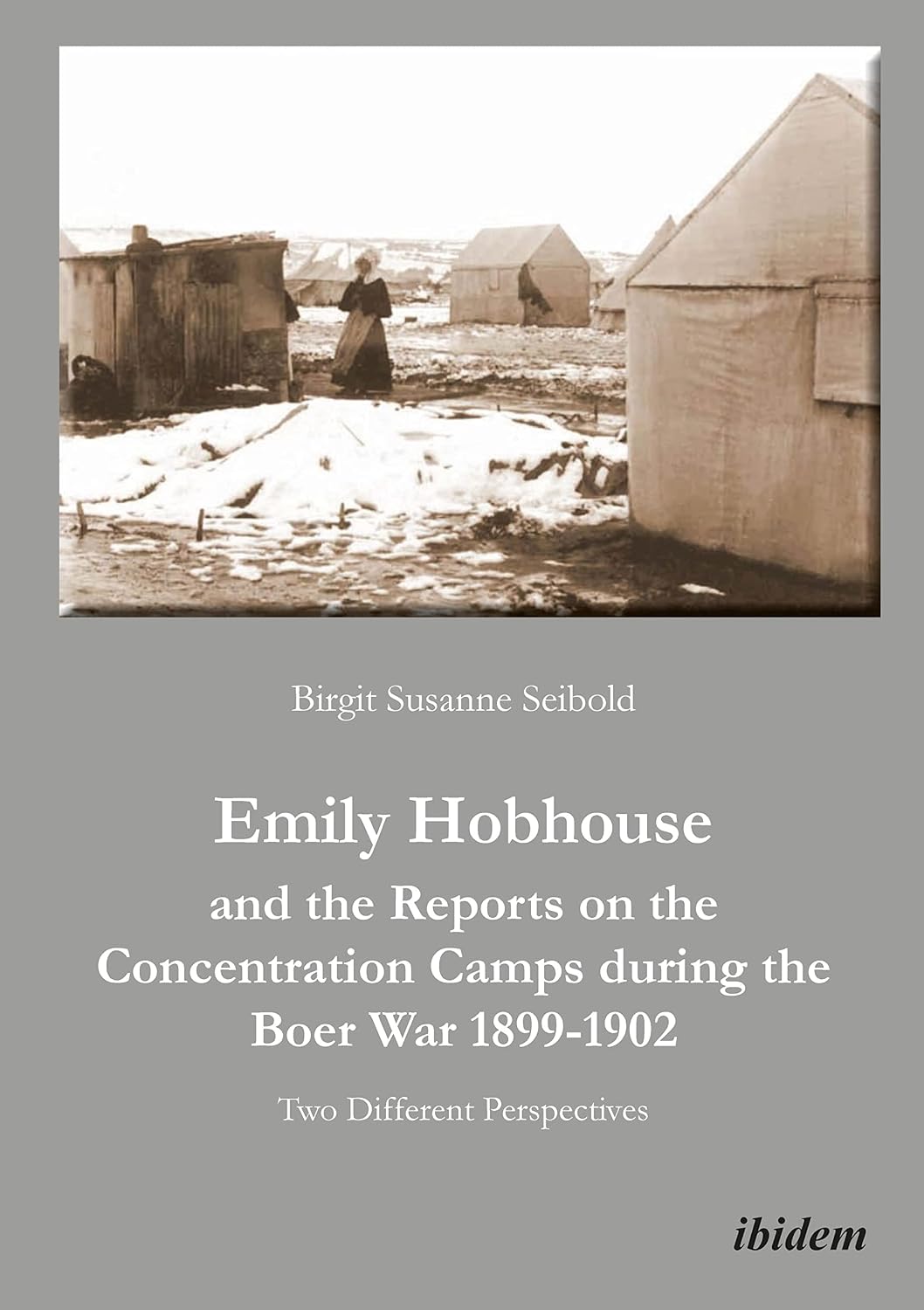
Emily Hobhouse and the Reports on the Concentration Camps during the Boer War 1899-1902: Two Different Perspectives
Product details
| Management number | 233576376 | Release Date | 2026/06/27 | List Price | US$7.58 | Model Number | 233576376 | ||
|---|---|---|---|---|---|---|---|---|---|
| Category | |||||||||
The black spot—the one very black spot—in the picture is the frightful mortality in the Concentration Camps. I entirely agree with you in thinking, that while a hundred explanations may be offered and a hundred excuses made, they do not really amount to any adequate defence. I should much prefer to say at once, so far as the Civil authorities are concerned, that we were suddenly confronted with a problem not of our making, with which it was beyond our power properly to grapple. And no doubt its vastness was not realised soon enough. It was not till six weeks or two months ago that it dawned on me personally, (I cannot speak for others), that the enormous mortality was not merely incidental to the first formation of the camps and the sudden inrush of thousands of people already sick and starving, but was going to continue. The fact that it continues, is no doubt a condemnation of the Camp system. The whole thing, I think now, has been a mistake.Alfred Milner to Joseph Chamberlain, December 7th, 1901The British scorched earth policy during the last phase of the Anglo-Boer War of 1899-1902 led to the burning of farms, the destruction of homesteads, harvests and livestock and to the internment of the civil population in the so-called concentration camps. There, people—mainly women and children—died of malnutrition and diseases such as measles, pneumonia and typhoid. The death rate in the camps was so high—nearly 28,000 white Boers succumbed—that the English population, renowned for its gallantry and chivalry, was consternated. Lloyd George blamed his government for its policy of extermination, Campbell-Bannerman spoke of methods of barbarism, and philanthropic institutions protested, led by Emily Hobhouse, who was the first civilian to investigate the conditions of the camps. The government reacted and sent a ladies' commission under the leadership of Millicent Garrett Fawcett to South Africa.Birgit Seibold's study is the first to compare the "inofficial" and the official report on the camps and to give an insight into conditions in each of the thirty-three white concentration camps. Based on first-hand research among the Hobhouse manuscripts, this book is both scholarly and compulsively readable. Read more
| ASIN | B0BGSW9Z1D |
|---|---|
| XRay | Not Enabled |
| Format | Print Replica |
| ISBN13 | 978-3838263205 |
| Language | English |
| File size | 6.3 MB |
| Page Flip | Not Enabled |
| Publisher | ibidem |
| Word Wise | Not Enabled |
| Accessibility | Learn more |
| Publication date | February 1, 2014 |
| Enhanced typesetting | Not Enabled |
Bestseller ranking
Survival




Customers who viewed this product also viewed
Southern Africa


Correction of product information
If you notice any omissions or errors in the product information on this page, please use the correction request form below.
Correction Request Form